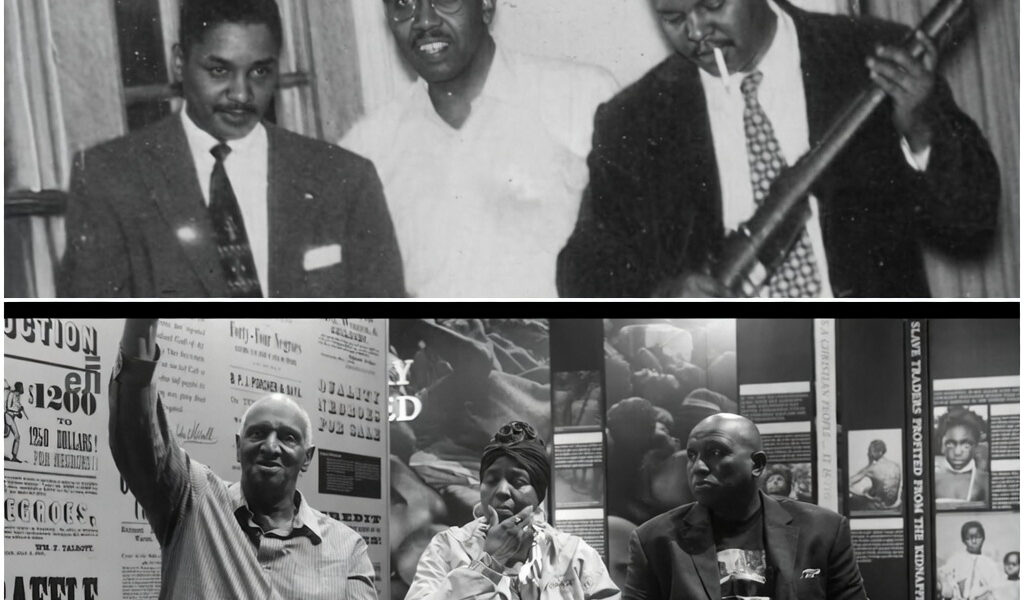

50 cars filled with Ku Klux Clan members rolled through Monroe, North Carolina, led by the town’s own police chief. Their target, a brick house where Marine Corps veteran Robert F. Williams and a group of black World War II soldiers waited. The clan had terrorized this neighborhood for months.
But tonight, black men would shoot back. Monroe, North Carolina, sat 30 m southeast of Charlotte, a small textile town of 12,000 people where cotton mills provided jobs, and Jim Crow provided the rules. The railroad tracks divided white from black, prosperity from poverty, safety from terror. On one side lived the people who ran the town.
On the other lived the people who kept it running, cooking in white kitchens, cleaning white homes, working whiteowned factories for a fraction of white wages. Robert Franklin Williams arrived back in Monroe in 1955, though calling it an arrival suggests he’d been welcome somewhere else.
Born in this town on February 26th, 1925, he’d grown up hearing stories from his grandmother, a former slave who’d given him his grandfather’s rifle and told him what it meant to survive in a place that wanted you dead. His grandfather had been a Republican organizer during reconstruction, publishing a newspaper called The People’s Voice until white violence made him choose between his voice and his life.
He chose life, but kept the rifle. Williams knew Monroe’s particular brand of hatred intimately. When he was 11 years old, he’d watched police officer Jesse Helms, Senior, father of the future senator, drag a black woman bleeding through the streets by her hair after administering what the officer called an arrest.
The woman’s screams echoed in William’s head for years. The sight of that badge glinting in the sun, while white onlookers smiled and nodded, taught young Robert a lesson that no school would ever address. The law in Monroe wasn’t there to protect him. It was there to remind him of his place. He’d tried to escape that place.
During World War II, Williams migrated north like hundreds of thousands of other black southerners, finding work in Detroit’s auto factories. He was there in 1943 when white mobs stormed through black neighborhoods, killing dozens. He fought back then, young and angry, learning that northern freedom was just southern oppression with better lighting.
In 1944, he was drafted into the army, serving until 1946. Then he joined the Marines 1954 to 1955 where he learned discipline, marksmanship, and the bitter irony of defending a country that wouldn’t defend him. When he returned to Monroe in 1955, he found the local National Association for the Advancement of Colored People chapter gasping its last breath.
Six members remained from what had once been a thriving organization. The others had been fired from jobs, threatened, beaten, driven out. Southern states were systematically destroying the NAACP, branding it communist, outlawing it where they could. In Monroe, simply attending a meeting could cost you everything.
Williams started recruiting, not from the middle class teachers and preachers who typically led Nerbo ACP chapters. He went to the factories, the farms, the unemployed men standing on corners. Most importantly, he went to the veterans. Men who’d seen combat, who’d been trained to fight, who’d tasted just enough equality in uniform to make segregation unbearable when they came home. Men like Dr. Albert Perry.
Dr. Albert E. Perry was everything Monroe’s white establishment wanted to deny could exist. A black man with a medical degree, a veteran, a practicing physician at the local hospital. He bought a nice brick house, drove a decent car, and had the audacity to act like he deserved respect.
Williams made him vice president of the Monroe EndoACP. Together, they set about picking fights the previous leadership would never have dared to start. Their first victory came quiet. In 1956, they integrated the public library. White Monroe barely noticed because White Monroe barely used the library, but Williams and Perry noticed.
They’d proven that pressure worked, that the system could be moved. So, they picked a target that mattered more, the swimming pool. In the summer of 1957, two black children drowned in a creek. There was nowhere else for them to swim. Monroe’s public pool, built with federal tax dollars that black families paid just like white families, was reserved exclusively for white residents.
Black children had to make do with unsupervised creeks, muddy rivers, and the consequences that came with them. Two children went under and didn’t come up. Their names were lost to history. But their deaths sparked something that wouldn’t be forgotten. Williams went to the city council with a reasonable request.
Open the pool to black children. one day a week, just one day. The council’s response was a masterclass in creative racism. Draining and refilling the pool after black people used it. They explained with straight faces, would simply be too expensive. Segregation, they suggested, was an economic necessity. Williams had a different analysis.
Standing before the council, he delivered a line that cut through Monroe’s polite racism like a blade. Segregation, he said, is a luxury that Monroe cannot afford. He organized picket lines. Eight people at first, standing at the pool gates, silent, peaceful, exactly the kind of protest that Martin Luther King Jr. was preaching across the South.
And Monroe responded the way Monroe always responded, with violence. Shots rang out at the picket lines. No one was arrested. Law enforcement officers stood by and watched. The message was clear. You can protest all you want, but when the bullets fly, you’re on your own. That’s when the Ku Klux Clan got involved.
The clan in Monroe wasn’t some fringe element hiding in the shadows. In a town of 12,000 people, the press estimated 7,500 clan members and supporters, more than half the town. They held massive rallies where thousands gathered in their robes and hoods, listening to speakers promise to keep Monroe pure, to keep the races separate, to handle these uppety agitators who thought they deserved to swim in white water.
Leading these rallies was James William Catfish Cole, a South Carolina clan organizer who’d made Monroe his personal project. Cole was the clan’s regional heavyweight, a man who commanded respect in white supremacist circles, someone who got things done. He held rallies where he specifically named Williams and Perry, calling them communists, troublemakers, threats to the southern way of life.
Then his followers would pile into their cars and form motorcades. Here’s where the institutional betrayal became impossible to ignore. Monroe’s police chief, aa Moour, didn’t try to stop these motorcades. He led them. Squad cars with flashing lights would escort 50, sometimes more clan vehicles through Monroe’s streets.
The procession would wind through town, then head across the railroad tracks into New Town, the black section. And there they’d drive past specific houses, firing guns into windows, throwing bottles, shouting threats, while the police chief made sure they had safe passage. Dr. Perry’s house became a favorite target.
Night after night, the motorcade would roll past and gunfire would erupt. Perry, his wife, his children huddling inside while bullets punched through walls. He’d call the police. They’d tell him they couldn’t confirm any shooting had occurred despite the holes in his house and the shell casings in his yard.
Then they’d suggest perhaps he’d be safer if he stopped causing trouble. Williams made a decision that would define his life and split the civil rights movement. If the law wouldn’t protect black people, black people would protect themselves. He applied for a charter from the National Rifle Association.
The NRA approved it without hesitation. Williams formed what he called the Black Armed Guard, though officially it was the Monroe chapter of the NRA. 50 to 60 men, most of them veterans like Williams. Men who knew how to handle weapons, how to maintain discipline under fire, how to return fire effectively.
They trained, they drilled, they bought guns with money raised from supporters, including fundraisers in Harlem, where Malcolm X would later invite Williams to speak at his mosque. They studied tactics, and they prepared Dr. Perry’s house like it was a forward operating base. By October 1957, tensions in Monroe had reached a breaking point.
The clan’s motorcades continued, increasingly brazen. White Monroe had circulated petitions to have Williams and Perry driven from town. Anonymous death threats arrived daily. Williams insurance company canled his coverage, citing the risk. When he asked the police chief why his insurance was canled if there was no danger, the chief had no answer.
On October 5th, 1957, the clan decided to make their point permanent. They were going to Dr. Perry’s house. And this time, they weren’t just going to shoot at it. They were going to burn it down with everyone inside. Williams got word through the black community’s network. People who worked in white homes, who overheard conversations, who understood that information meant survival.
The clan was coming in force. Tonight, Williams and his men moved into Perry’s house that afternoon. They stacked sandbags along the windows. They positioned men with clear fields of fire. They made sure everyone understood the plan. No one fires first, but when they do fire, we fire back. Aim low. Disable.
Don’t kill if possible. Make it clear we’re serious without giving them martyrs. As the sun set, they waited. Perry’s family had been moved to safety. Inside the house were only men who’d made peace with what might happen next. Veterans who’d survived war only to find themselves at war in their own hometown.
men who’d sworn oaths to defend their country and were now defending their community from their neighbors. The sound reached them first. Engines, lots of engines, then the glow of headlights. Dozens of them winding through Monroe’s streets. The motorcade rolled past city hall, past the courthouse, past the nice white neighborhoods where people watched from their porches like it was a parade.
Then it crossed the tracks into New Town. 50 cars or more packed with clan members in full regalia. At the front, Monroe Police Chief Monour Squad car lights flashing. The motorcade snaked through New Town streets, and residents who’d seen this before pulled their children inside, turned off their lights, prayed this night wouldn’t be the night someone they loved got killed.
The procession turned onto Perry’s street. The cars slowed, then stopped, engines idling. Men began to emerge, white robes gleaming in the headlights. Some carried torches, some carried guns. All of them carried the certainty that this was their town, their right, their prerogative to do as they pleased. Then the shooting started.
Later, both sides would claim the other fired first. What’s certain is that gunfire erupted from the clan’s motorcade, slamming into Perry’s house. Bullets shattered windows, punched through the brick, tore through the front door. The roar was deafening. Dozens of weapons firing at once.
Inside the house, Williams gave the order. Fire. The response was disciplined, controlled, exactly what you’d expect from trained soldiers. Muzzle flashes erupted from Perry’s windows. The veterans inside had positioned themselves for overlapping fields of fire. They aimed low at car tires, at legs, at anything that wasn’t lethal, but would make their point crystal clear.
The clan had never experienced this. In all their years of terrorizing black neighborhoods, shooting into homes, burning crosses, inflicting violence with impunity. They’d never faced organized armed resistance. The psychological impact was immediate and total. These weren’t victims cowering in the dark. These were soldiers returning fire.
The clan panicked. Men in white robes scrambled back to their cars. Engines roared to life. Tires squealled. The entire motorcade broke formation and fled in every direction. Some cars running into each other in their desperation to escape. Within minutes, the street was empty except for abandoned robes, dropped torches, and the fading sound of engines racing back across the tracks to the safety of White Monroe.
Inside Perry’s house, Williams and his men held their positions. No pursuit, no celebration. They maintained their perimeter through the night, knowing retaliation might come, but it didn’t. The clan had been routed, humiliated, driven from a black neighborhood by black men with guns. The next morning, Monroe’s city council held an emergency session.
The same council that had said they couldn’t afford to let black children swim. The same council that had turned a blind eye to months of clan terrorism. They passed an ordinance effective immediately. The Ku Klux Clan was banned from Monroe without a special permit from the police chief. That ordinance was the first crack in Monroe’s wall of white supremacy.
Not because the council suddenly developed a conscience, but because armed black veterans had demonstrated something white Monroe couldn’t afford to ignore. In Williams own words, “Racists consider themselves superior beings and are not willing to exchange their superior lives for our inferior ones.
They are most vicious and violent when they can practice violence with impunity.” The shootout barely made the news. The Monroe Journal mentioned it briefly. Three black newspapers covered it. The national press ignored it completely. Just 3 months later, when the Lumbi tribe would route the clan in a similar confrontation, national media would descend on North Carolina, Life magazine would run photo spreads.
Politicians would issue statements. But when black men defended themselves with guns, white America decided that story was better left untold. Williams understood why. As he’d later write, “The national press played up the Indian clan fight because they didn’t consider this a great threat.
The Indians are a tiny minority and people could laugh at the incident as a sentimental joke. But no one wanted black people to get the impression that this was an accepted way to deal with the clan. So the white press maintained a complete blackout about our fight. But word spread through black communities across the south.
Veterans heard what had happened in Monroe. Working people heard. Young activists heard. The message was clear. Nonviolence was a tactic, not a suicide pact. You could advocate for peace while keeping a rifle behind the door. The October 5th shootout didn’t end Monroe’s racial violence, but it fundamentally changed its character.
The clan never conducted another motorcade through New Town. They couldn’t. They’d been exposed as cowards who only fought when resistance was impossible. When black men shot back, they ran. Less than a month later, the clan tried a different approach. If they couldn’t eliminate the troublemakers by force, they’d eliminate them through the legal system. Dr.
Perry was arrested on charges of performing an abortion on a white woman. The accusation was almost certainly false. Perry was Catholic, opposed to abortion on religious grounds. The woman herself said she’d asked him to perform the procedure, but that he’d refused. None of that mattered. The newspaper headline screamed, “Negro doctor arrested for criminal abortion on white woman.
” The racism was coded into every word. A black man’s hands on a white woman’s body, even in a medical context, was treated as inherently criminal. Perry was jailed. Williams led armed demonstrations at the courthouse. Hundreds of black residents openly carrying weapons demanding Perry’s release.
A white benefactor posted $7,000 bond. Perry was freed, but the damage was done. His trial came almost exactly a year after his arrest. October 21st, 1958. He was convicted and sentenced to 5 years in prison. Released after serving just over a year, Dr. Albert E. Perry never got his medical license back. He’d lost his profession, his livelihood, his future for the crime of standing up to the clan.
The system had accomplished through legal proceedings what the clan couldn’t accomplish with guns. Meanwhile, Williams faced his own reckoning with the broader civil rights movement. In late October 1958, just days after Perry’s conviction, a case exploded that would make Williams an international figure. Two black boys, 9-year-old James Hanover Thompson and seven-year-old David Fuzzy Simpson, had been playing with white children.
During a kissing game, a 7-year-old white girl named [ __ ] Sutton kissed both boys on the cheek. When she mentioned it to her mother, White Monroe reacted with hysterical rage. The mother washed her daughter’s mouth with lie. Armed men hunted for the boys. Police arrested James and David, handcuffed them, took them to jail, and spent six days interrogating them without allowing them access to parents or lawyers.
They were beaten, threatened with lynching, told they’d raped a white girl. Judge Hampton Price heard the case. Such as it was, the boys had no legal representation. They stood silent, terrified. The judge interpreted their silence as a confession. He sentenced both boys to indefinite terms in reform school, possibly until age 21, for a kiss, a kiss that a white girl had initiated.
Williams mobilized international attention. He contacted journalists in Europe. He worked with activists in New York to form the committee to combat racial injustice. He turned the kissing case into a global embarrassment for the United States with demonstrations in Paris, Rome, and Vienna.
Former first lady Elellanena Roosevelt intervened with North Carolina’s governor. President Eisenhower received thousands of letters after three months. On February the 13th, 1959, Governor Luther Hodges pardoned the boys without explanation or apology. They were released. Their lives were destroyed. James Thompson would spend most of his adult life in and out of prison.
David Simpson largely disappeared from the record. In 2011 interviews, James’ sister Brenda would remember sweeping bullets off their front porch every morning while the clan burned crosses in their yard. The kissing case made Williams famous, but it also made him a target. Then came the event that would force him into exile.
In May 1959, a Monroe court heard the case of Mary Ruth Reed, a 23-year-old black woman who was eight months pregnant when Louis Medlin, a white man, assaulted her and attempted to rape her. Medlin was charged. The trial was brief. The all-white jury deliberated briefly, not guilty.
William stood on the courthouse steps as Medlin walked free and he said something that would end his leadership of the Monroe Endo ACP. Black women approached him devastated, asking what they were supposed to do now that white men knew they could assault black women with impunity. Williams told them, “We cannot rely on the law.
We must defend ourselves. If it takes violence to get justice, then we must meet violence with violence.” The next day, National Endobo ACP head Roy Wilkins called. Williams confirmed he’d made the statement and would repeat it. Within hours, Wilkins suspended Williams from the End Obog ACP for 6 months.
The organization Williams had rebuilt from six members to hundreds. The chapter that had achieved what no other southern and BACP chapter had dared attempt was now too militant, too aggressive, too willing to fight back. Williams didn’t stop. He founded a newsletter, The Crusader. Continuing his grandfather’s tradition of publishing.
He continued organizing. In 1961, when freedom riders came to Monroe, Williams armed guards protected them. When white mobs attacked non-violent demonstrators, Williams men formed defensive perimeters. Martin Luther King Jr. refused to visit Monroe specifically because William’s armed guards were there.
The philosophical divide between nonviolence and self-defense had become irreconcilable. On August 27th, 1961, violence erupted in Monroe again. Freedom riders had been demonstrating. White mobs attacked. In the chaos, a white couple from a nearby town, Bruce and Mabel Stegle, drove into New Town by accident.
Residents surrounded their car, thinking it was part of the mob. Williams personally intervened, brought the couple into his own home for protection, kept them safe for two hours until tensions cooled and they could leave unharmed. The Stegals left safely. Then Monroe Police Chief Mourney, the same man who’d led KKK motorcades, told Williams, “In 30 minutes, you’ll be hanging in the courthouse square.
” The FBI issued a federal warrant for Williams arrest on kidnapping charges. The couple he’d protected claimed he’d held them hostage. Williams knew what was coming. Monroe’s law enforcement, which had never arrested a single clansman for terrorizing black neighborhoods, was about to lynch him legally.
He and his wife Mabel fled, first to Canada, then to Cuba, then to China. He wouldn’t return to the United States until 1969. From exile in Cuba, Williams broadcast Radio Free Dixie, a weekly program featuring jazz, blues, news, and commentary directed at black listeners in the American South. He wrote his book Negroes with Guns, published in 1962, which would become essential reading for a new generation of activists.
Huey Newton and Bobby Seal would cite it as inspiration for the Black Panther Party. The idea that black people had the right to defend themselves with weapons, that armed resistance was a legitimate response to armed oppression spread through the Black Power movement of the late60s.
The kidnapping charges were finally dropped in 1975. Williams returned to Michigan where he lived quietly until October 15th, 1996 when he died of Hodkdins lymphoma at age 71. Rosa Parks delivered his eulogy in Monroe, the town that had driven him into exile for daring to suggest black people deserved to swim in public pools. The night of October 5th, 1957 changed nothing and everything.
Monroe remained segregated. The clan remained powerful. Racism remained the law, but something had shifted. Black men with military training had demonstrated that white supremacist violence wasn’t cost-free. They’d shown that victims could become defenders, that terror could be met with resistance, that the oppressed didn’t have to die quietly.
History tried to forget that night. The civil rights narrative we teach emphasizes nonviolence, peaceful protest, moral persuasion. We celebrate the bus boycott and sitins, the marches and speeches. We’re less comfortable acknowledging that sometimes black people survived because they had guns and knew how to use them.
That veterans who’d fought fascism overseas came home and fought it at home. That the clan stopped terrorizing certain neighborhoods because they knew armed men waited in the darkness. Robert F. Williams never apologized for October 5th. In his book, he wrote, “It has always been an accepted right of Americans, as the history of our western states proves, that where the law is unable to enforce order, the citizens can and must act in self-defense.
” We asserted this right, and we did what the law officers refused to do. We stopped the terror. We stopped it permanently. The Monroe shootout poses an uncomfortable question for American history. How much of the progress we credit to moral appeals actually came from the threat of armed resistance? How many white supremacists backed down, not because they’d seen the light, but because they’d seen what happened when black veterans shot back? How much of the civil rights movement’s success depended on the unspoken pressure of men like Williams, proving that black communities could defend themselves if pushed too far? We’ll never know for certain. What we do know is that after October 5th, 1957, the clan never conducted another armed motorcade through Monroe’s black neighborhoods. We know that the city council passed an anti-clan ordinance the very next morning after refusing to act for months. We know that white Monroe’s terrorism lost its impunity.
And we know that black veterans, men who’d been told they weren’t good enough to swim in public pools, proved they were more than good enough to stand their ground when armed mobs came calling. The story of that night and the man who organized the resistance deserves more than a footnote. It deserves to be told in full as a reminder that justice in America has often been extracted at gunpoint by people who refused to die quietly.
Robert F. Williams and his men didn’t start the violence in Monroe. They just finished it.
Read more:
Nobody in the FBI surveillance team watching the Warfield restaurant that morning expected what they were about to record. They had the camera positioned on the exterior of the building for weeks. They had the audio bug planted inside. They were watching for John Stanfa, the Sicilianborn Philadelphia mob boss who owned the building and stopped in most mornings before heading to his warehouse on Washington Avenue.
What they got instead was something they had no protocol for. Something that had no real precedent in the documented history of American organized crime. A mob hit beginning to end, captured on both audio and video simultaneously in which the man giving the order to shoot was the victim’s own younger brother.
The FBI watched it happen. They recorded every second of it and they could not stop any of it. What you are about to hear is not a story about a mob war between two rival factions. It is a story about what a mob war does to a family when that family is the fault line the war runs through.
It is a story about three brothers, one-inch prison, one on each side of a shooting, and a father in a federal cell who watched both sons he could still reach get destroyed before the year was out. The Canian Kaglini family, South Philadelphia, 1993. Here is everything. There is a conversation documented in federal testimony that tells you exactly where this story goes before you know a single name involved.
Tommy Horseheads Scapiti, a Philadelphia mob associate who eventually became a government witness, is sitting with Michael Chianka Gleini in the months before March 1993. Michael is 29 years old, lean, serious, with his father’s South Philadelphia bearing and his childhood friend Joey Merino’s recklessness bred into everything he does.
He looks at Scapiti and says the following words documented verbatim in his federal testimony. We’re going to go kill that grease ball and we’re going to go kill my brother. If you don’t want to do it, I’m going to kill you right here, right now. Scapiti freezes, not because of the threat to himself, because of the seven words in the middle of that sentence.
We’re going to go kill my brother. His brother is Joseph Joey Chang Chianka Gleini Junior, 34 years old, dark-haired, handsome, the underboss of the Philadelphia crime family. The man sitting in the back room of the Warfield Breakfast Restaurant on East Pacunk Avenue every morning at 5:58 a.m. preparing for another workday.
The man who taught Michael everything he knows about how this world operates. The man whose father is the same father. That documented sentence spoken casually as if announcing a schedule is the beginning, the middle, and the end of the Chian Kaglini story compressed into one breath.
Everything before it is context. Everything after it is consequence. Joseph Chicky Chiian Kagalini senior built his reputation in South Philadelphia across three decades as a feared capo in the Lucesi Allied Philadelphia crime family. He was not glamorous. He was not the kind of figure who ended up on magazine covers or talked to reporters.
He was the kind of man who made things happen quietly, accumulated power without attracting unnecessary attention, and produced three sons, John, Joseph Jr., and Michael, who inherited his neighborhood, his connections, and the specific weight of a name that meant something in South Philadelphia before any of them were old enough to understand what it meant.
When the FBI finished with Chicky Chunka Glennini in the mid 1980s, they had built a case strong enough for a 30year sentence. He went in. His boys were left to navigate what came after. John, the oldest, was arrested in 1988 and sentenced to 9 years for extortion. Joseph was in his late 20s trying to find his position in a family that had just lost Nikki Scaro to a five-year federal sentence and was waiting to see what came next.
Michael, the youngest of the three, had found his position already. He had found it in a grade school in Point Breeze, sitting next to a boy named Joseph Salvatore Merino Joey, the son of former under boss Chucky Merino, who was going to grow into the most flamboyant and dangerous figure in the Philadelphia family’s modern history.
Michael and Joey were inseparable. They were arrested together. They were convicted together. They built their rebellion together. And this is what John Stanfo walked into when the New York families installed him as Philadelphia boss in 1991. Not a unified family waiting for direction. A family with a fault line running directly through its most prominent bloodline.
Stanfa’s calculation was logical on paper. He looked at the chunkagini name, respected, feared, multigenerational, and saw a bridge. If he took Joseph, the middle brother, made him under boss, gave him the title and the authority. Joseph’s presence inside the administration would theoretically anchor the young Turks who were already murmuring about Stanfa’s legitimacy.
Joseph was not Michael. He was not connected to Merino’s rebellion. He was the steady one, the practical one, the one who opened a restaurant and ran it honestly alongside his mob work, who moved through the neighborhood without the specific recklessness that was going to get his brother killed.
What Stanford did not fully calculate or perhaps calculated and dismissed was the specific position he was creating for Joseph. Not a bridge, a target. a man whose boss needed him to control his own brother while his own brother was actively planning to destroy that boss. Every day Joseph Chiankini went to work as under boss of the Philadelphia family was a day he was positioned directly between two men who were moving toward each other with weapons.
The first shot in the Chonkaglini war is fired not in 1993 but a full year earlier. The 3rd of March, 1992. Michael Chiian Kaglini comes home from a basketball game and approaches his South Philadelphia house. Two men are waiting. They have shotguns. They open fire. Michael dives inside and takes cover. He survives.
He lies on the floor of his house in the dark and processes what just happened. Then he goes through the specific inventory of detail that a man raised in this world performs automatically the build, the walk, the way the shooter moved. He has known that walk his entire life. His brother Joseph was behind one of those guns, acting on Stanfa’s orders.
Michael gets up off the floor. He calls Joey Merino. He tells him what he now knows. From this moment, the Chanka family ceases to exist as a family in any meaningful sense. What remains is a father in federal prison, two brothers at war, and a clock running toward the 2nd of March, 1993. Stanfa attempts a ceasefire.
That September, he convenes a formal induction ceremony and makes both Merino and Michael Chianka Glein as official members of the Philadelphia crime family. He extends the ultimate institutional gesture, the ceremony that is supposed to mean loyalty, obligation, protection to the two men who are actively planning to end his tenure and kill his underboss.
Merino accepts the honors. Michael accepts the honors. Neither one of them slows down. The Warfield is the mechanism they choose. Joseph Chian Kaglini owns and operates the Warfield Breakfast and Lunch Restaurant on East Pion Avenue. He opens it every morning before 6:00 a.m. His routine is fixed, predictable, documented.
He is there every day. The FBI knows this, which is why they have a camera on the building’s exterior and an audio bug on the inside. Stanford knows this, which is why he goes there most mornings to talk before heading to his warehouse. Michael and Merino know this because Joseph is their brother and their underboss and they have known his schedule for years.
The original plan targets two men simultaneously. Joseph Chianagini is one. John Stanfa is the other. If both men die at the warfield on the same morning, the Philadelphia mob has no boss and no underboss before breakfast. What stops the plan from achieving its full design is something the hit team cannot control.
Stanfa does not come that morning. For reasons that are never clearly documented, Stanfa skips his usual visit to the warfield on the morning of the 2nd of March 1993. The hit team goes in anyway. 5:58 a.m. The FBI camera captures the station wagon at 5 hours 58 minutes and 18 seconds, driving right to left past the Warfield’s exterior.
22 seconds later, at 5 hours 58 minutes and 40 seconds, the figures come running from the direction of the station wagon. Three or four men masked, moving fast. They burst through the front door. The audio bug inside the warfield captures what the camera cannot see. Susan Lucabello, the waitress who rode to work with her boss that morning, who has set up the front of house and is waiting for the day to begin screams.
There are rapid footfalls a door. The storage room in the back of the building where Joseph Chian Kagini is working. He is shot three times in the head. Once in the foot, once in the shoulder. The men exit. The station wagon is gone. South Philadelphia is quiet again. The entire documented sequence from the station wagon’s first appearance to the exit of the last shooter is captured on both video and audio, making the Warfield shooting one of the only mob hits in American history, preserved completely in real time on government surveillance. Joseph Siani survives biologically. His heart keeps beating. His body continues to function in the most basic sense. He never speaks again. He never walks again. He never recovers any meaningful neurological function. He spends the rest of his life in a permanent vegetative state, neither dead nor alive
in any way that the man who walked into the warfield that morning would recognize as living. His brother, Michael, when told that Joseph survived the shooting, is documented to have expressed his frustration not at his brother’s survival, but at Stanfa’s absence. The man he wanted most was not in the building. Five months.
That is how long the distance between the two remaining acts of this story takes to close. The 5th of August, 1993. A sunny afternoon on the 600 block of Katherine Street, South Philadelphia. Joey Merino and Michael Chunkaglini are walking together outside their social club. Stanford’s gunman John VC and Philip Kleti are in a Ford Taurus circling waiting for this exact configuration of circumstances.
VC is in the back seat with a 9 mm. Kleti has a 45 in the front. They circle the block once to clear a bystander, V’s own brother, Billy, a childhood friend of Merinos, and then Kleti pulls alongside the two men on the sidewalk. Both men fire simultaneously. Michael Chiankini is hit in the arm and chest. He goes down. He tries to get up.
He falls again. He dies on the Catherine Street sidewalk. He is 30 years old. Joey Merino takes bullets in the leg and buttocks. He goes to the hospital of the University of Pennsylvania in stable condition. He survives. Michael does not. The Ford Taurus is found 35 blocks away, burned to the frame.
Hundreds attend Michael’s viewing at the Cartau Funeral Home. A neighbor interviewed by the Inquirer says, “Why’d he get killed? Look at the life he lived.” In a federal prison somewhere in the United States, Chicky Siani receives the second piece of news in 5 months. Joseph is in a hospital bed, permanently vegetative, destroyed by three bullets from men his brother sent.
Michael is dead on a South Philadelphia sidewalk, destroyed by bullets from a boss he spent two years trying to kill first. The father who gave his sons his name and his neighborhood and the specific inheritance of a family that had been inside the Philadelphia mob for 30 years is sitting in a cell having lost both sons he could still reach before the summer of 1993 is over.
John Stanfa is arrested on March 17, 1994 along with 23 of his associates on 31 racketeering charges. The mechanism of his fall is specific and documented. John Vzy, the gunman who killed Michael Chian Kaglini on Katherine Street, is lured to a second floor apartment above a meat store in January 1994 by Stanford’s own underboss, Frank Martins, who shoots him four times in the head and chest.
VC, who is by every account genuinely too tough to die, wrestles a knife from Martine’s partner, slashes Martines across the eye, and escapes down the stairs and onto the street. He goes to the FBI within days. His testimony, combined with what the FBI has already documented across years of surveillance, produces the indictment.
Stanfa is convicted in November 1995 and sentenced to life in 1996. Joey Merino takes control of what remains. He wins the war that Michael Chiian Kaglini died fighting. He is convicted of raketeering in 2001, serves 14 years, and remains the documented dominant figure in the Philadelphia family into the 2020s.
John Shankagini, the eldest Chang brother, who spent the entire war serving his own federal sentence, is eventually released. He rises to consiglier of the Philadelphia family. He is charged with simple assault following a brawl at Chicks and Pete sports bar in South Philadelphia in August 2024.
When reached by a reporter and asked about his history, he says, “No sir, don’t believe everything you read.” Chicky Sian Gleiny Joseph Senior, the feared Cappo, the man whose name built everything and whose sentence left his sons to navigate it alone, is released from federal prison. He never cooperates with federal authorities across decades of prosecution and every pressure applied to him.
He dies on March 6th, 2023 at age 88 at a facility in Philadelphia. Mob Talk Sitdown describes him as an ultimate standup guy. He dies having outlived two of his three sons, having watched both of them taken by the same war, having never spoken publicly about any of it from the moment he went in to the moment he died.
Joseph Joey Chang Chiian Kaglini Jr. is never charged, never prosecuted. The FBI tape of his own shooting plays at multiple trials. He is a victim. He remains in the condition produced by three bullets in the back of a South Philadelphia restaurant until his death. The man who walked into the warfield that mo
rning at 5:58 a.m. Dark-haired, handsome, the underboss of the Philadelphia crime family, the middle son of Chicky Siana Gleini, the brother standing between two sides of a war, does not come back from that storage room. And somewhere in the documented federal testimony that dismantled everything, Tommy Horseheads Scapiti’s words sit in the court record exactly as Michael Chiian Kaglini spoke them.
We’re going to go kill that [ __ ] and we’re going to go kill my brother. The matterof fact delivery. The casual inclusion of his own blood in the same sentence as his enemy. The specific thing that happens to a family when a mob war decides it has no use for the distinction between the two. The FBI tape is still in the evidence archive.
Susan Lucabelloo’s scream is still on it. The timestamp still reads 5 hours 58 minutes and 40 seconds. And three sons of a South Philadelphia Kappo are either dead, paralyzed, or old and charged with brawling in a sports bar. And the only man from that generation who died in his own bed was the one who went to prison first and missed the entire