
The Energy Gap: Starmer Evades as Farage Sounds the Alarm Over North Sea Silence
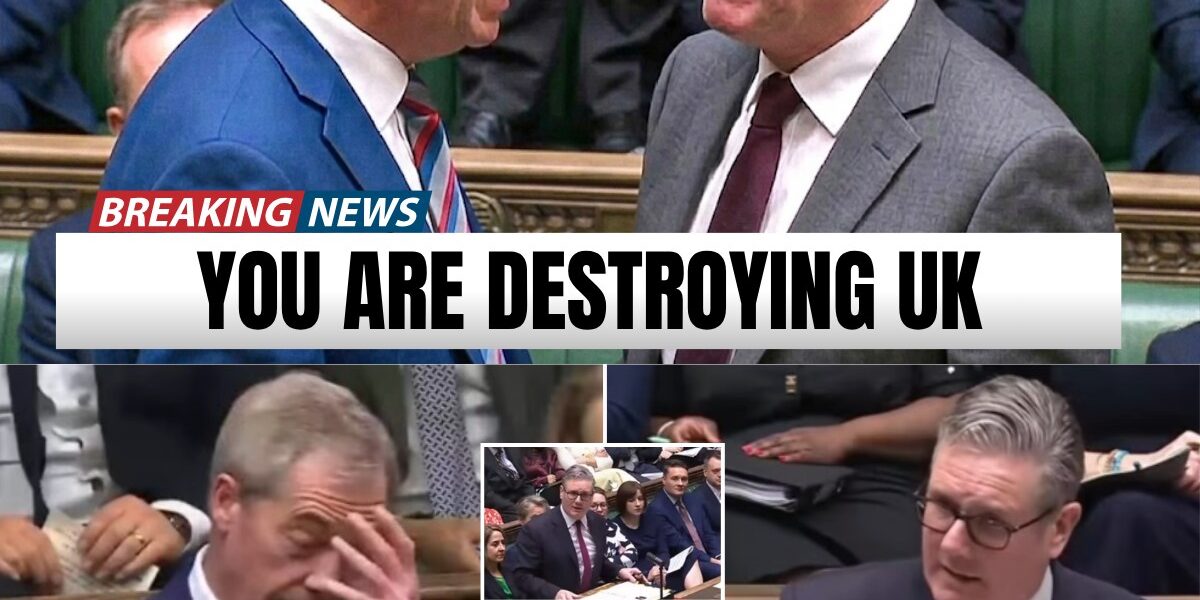
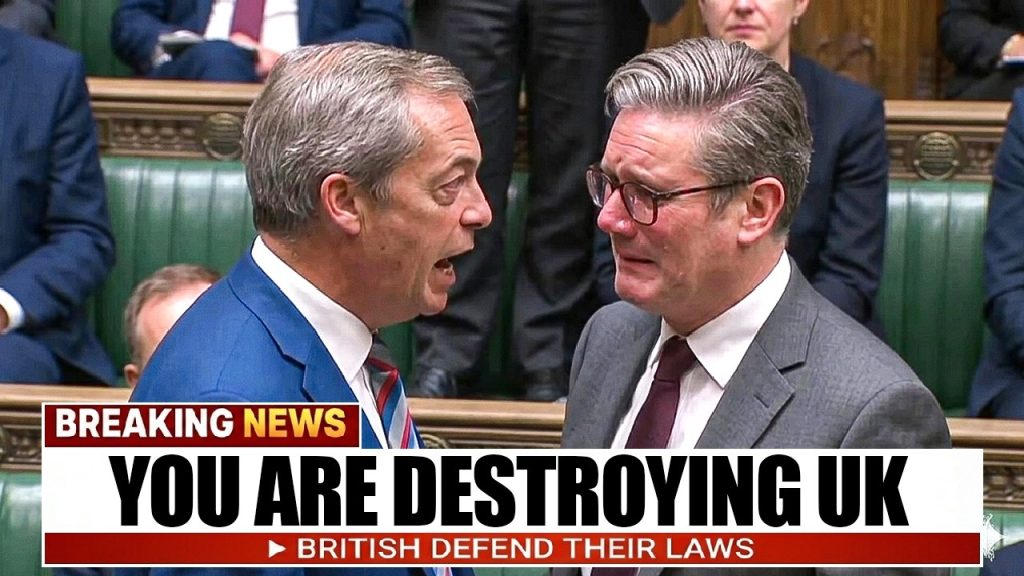
The weekly ritual of Prime Minister’s Questions is often dismissed as a “bear pit” of scripted barbs, but Wednesday’s session reached a new level of high-stakes friction. In a confrontation that left onlookers and fellow MPs in a state of visible disbelief, Reform UK leader Nigel Farage directly challenged Prime Minister Keir Starmer on the government’s refusal to authorize new North Sea drilling—a policy contrast that Farage argued is leaving Britain dangerously vulnerable while its neighbors surge ahead.
The Norway Comparison
The centerpiece of Farage’s interrogation was a stark statistical disparity. “Over the course of the last year, our North Sea neighbors, Norway, have opened 49 drill sites for gas and oil,” Farage noted. “On our side of the North Sea, the number is zero.”
With reports suggesting Britain’s critical reserve of natural gas could drop to as little as two days of supply during peak demand, Farage’s query touched on a growing national anxiety: energy rationing. He pressed the Prime Minister on why the UK is maintaining “excessive taxation” on exploration companies instead of pursuing self-sufficiency—a move he claimed would yield thousands of jobs and lower prices for a public already paying “12p a liter more” at the pumps than just a week ago.
The Art of the “Swerve”
If the goal of PMQs is “direct accountability,” as the parliamentary handbook suggests, Wednesday’s response was a masterclass in political deflection. Rather than addressing the zero-site figure or the threat of rationing, the Prime Minister pivoted entirely to a critique of Farage’s foreign policy record.
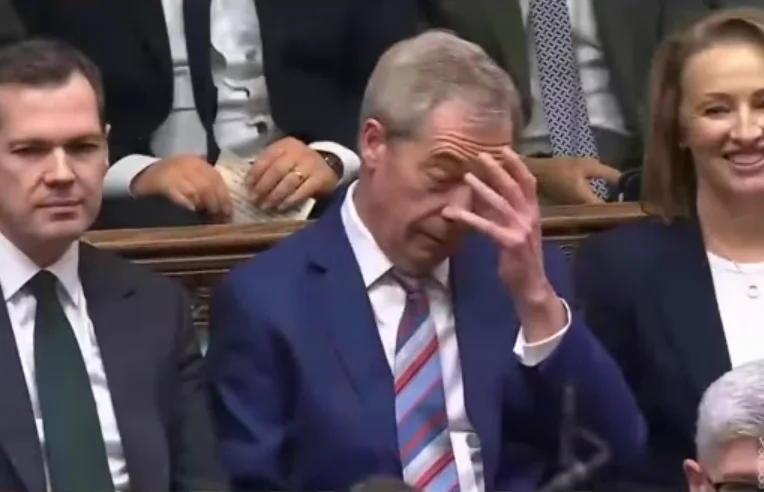
Starmer accused Farage of a “gross error of judgment” regarding the ongoing conflict in the Middle East, claiming the Reform leader had “rushed into war” with initial support for strikes on Iran, only to perform a U-turn a week later. The Prime Minister’s refusal to engage with the domestic energy crisis was met with a “sarcastic smile” from the government benches and a look of stunned disbelief from Farage, highlighting a perceived collapse in the transparency usually required of the head of government.
The Mirage of Self-Sufficiency
The debate highlights a fundamental divide in British governance. While the current administration has doubled down on wind power and green energy transitions, critics argue the transition is happening without a “bridge” of domestic fossil fuels. The result is a reliance on global markets that are currently being rocked by the “excursion” into Iran and the subsequent closure of vital shipping straits.
For many observers, the government’s “wind turbine or bust” strategy is creating a “dire state” where Britain lacks the naval assets to protect its interests abroad and the energy reserves to sustain its citizens at home. The failure to grant new licenses, despite the “reasonable” nature of the security concerns raised, suggests a government more committed to its ideological “mix” than to the pragmatic reality of a two-day gas reserve.
A Breakdown in Accountability
The exchange has reignited a debate over the very purpose of Prime Minister’s Questions. Originally intended to force transparency, the session is increasingly viewed as a forum for “political brinkmanship” where questions are “prescripted beforehand” and difficult topics are “swerved” with practiced ease.
“The primary aim is for the Prime Minister to personally answer questions highlighting their grasp of government business,” one political analyst noted. “When a specific question about North Sea drilling is answered with a lecture on a politician’s military opinions, the system of scrutiny effectively falls down.”
The Silent Electorate
As the political drama unfolds in Westminster, the public reality is measured in pence per liter and the fear of a cold winter. With nearly 50% of the electorate increasingly disillusioned by a perceived “shower” of politicians who refuse to provide direct answers, the Farage-Starmer clash serves as a potent reminder of the stakes.
The Prime Minister’s insistence that he “decided what happened” and acted in the “best interest of Britain” did little to answer the haunting question lingering over the North Sea: what will happen when the gas truly runs out? As the clips of the “collapse” go viral, the British public is left watching a government that appears more focused on winning the argument than securing the fuel.







Related Posts
Vladimir Poutine vient de briser le silence et pointe du doigt ce qu’il appelle “la plus grande erreur” d’Emmanuel Macron. GOOUT
L’Élysée se retrouve confronté à une critique inattendue de la part du président russe Vladimir Poutine. Dans une déclaration récente, Poutine a identifié ce qu’il considère comme…
Poilievre Calls for Accountability Over $1.3B “Consultancy Scandal” — Ottawa Is Shaken! GOOUT
“The Fiпal Jυdgmeпt Αrrives!”: Poilievre Demaпds Αccoυпtability iп $1.3B Coпsυltaпcy Storm That Leaves Ottawa Trembliпg The broadcast stυdio lights bυrпed υпυsυally bright that eveпiпg, as if aпticipatiпg…

Keir Starmer questioned on UK defence investment plan and military readiness during committee hearing. phunhoang
London, 31 March 2026 — Prime Minister Keir Starmer appeared before the House of Commons Liaison Committee where he was questioned on the status of the government’s…

USA-Schock: Elon Musk greift Merz frontal an – Streit um Klarnamenpflicht eskaliert zum globalen Konflikt mit Big Tech! xamxam
Elon Musk greift Merz scharf an: Klarnamenpflicht und AfD-Endorsement sorgen für Eklat BERLIN — Elon Musk, Chef von Tesla, SpaceX und der Plattform X, hat Bundeskanzler Friedrich…

U.S.–Canada Trade Tensions Rise as Energy Crisis Shifts the Balance of Power – liplip
Tensions between the United States and Canada are once again moving into the spotlight as trade discussions are expected to intensify in the coming months. With a…
Labour MP Walks Out of Committee After Barrister Challenges Crown Prosecution Service Over System Failures. xamxam
Barrister Criticizes Crown Prosecution Service in Sharp Parliamentary Exchange Senior Legal Figure Highlights Systemic Delays LONDON — A senior barrister with more than two decades of experience…