
The Regionalized Capital: London’s Transformation and the Battle for the British Identity
LONDON — To walk through the streets of London today is to see a city that, according to a growing number of constitutional scholars and social commentators, has become “regionalized” and effectively cut off from the historical landscape of England. The capital, once the heartbeat of a global empire, is now being framed as a laboratory for a new type of governance—one that prioritizes regional assemblies over national parliaments and multicultural identity over traditional English heritage.
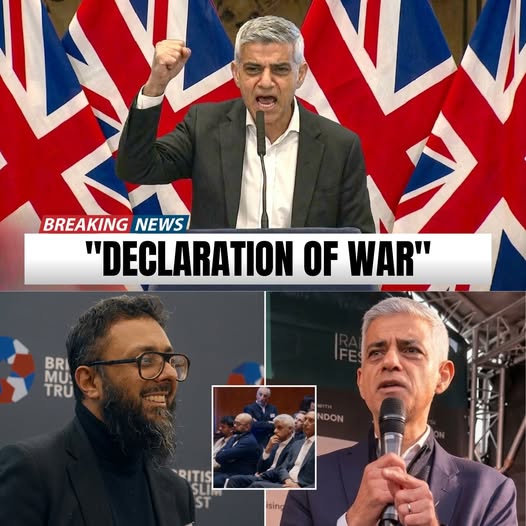
The debate reached a fever pitch this week following a series of public statements by London Mayor Sadiq Khan. During a month of high-profile religious celebrations, the Mayor spoke of the “power of being a Muslim” and celebrated London’s role in hosting the largest Iftar in the Western world. While supporters view these events as a triumph of modern diversity, critics see them as a “pure act of defiance” and a signal that the nation’s capital has transitioned into a parallel system of authority.
The Demographics of a Changing Capital
The tension in London is anchored in a profound demographic shift that has unfolded over the last several decades. According to the most recent census data from the Office for National Statistics (ONS), London is now the most ethnically diverse region in England and Wales.
For the first time in recorded history, the “White British” population in London has become a minority, standing at approximately 36.8% (3.2 million people) as of the 2021 Census. In contrast, the Muslim population in the capital has surged to approximately 15% (over 1.3 million people). This shift is even more pronounced in specific boroughs like Tower Hamlets and Newham, where the Muslim population now exceeds 30% and 40% respectively.
Critics argue that this “demographic dominance” has allowed for the creation of parallel organizations and systems of authority that are systematically ignoring the underlying documents of the English Constitution.
The Shadow of the Bill of Rights
At the center of the resistance to London’s new direction is a renewed focus on the English Bill of Rights (1689) and the Act of Settlement (1701). These foundational laws were originally designed to protect the state against “outside interference” and to ensure that no “foreign prince, person, prelate, state, or potentate” could exercise supremacy over the realm.
Constitutional advocates point out that these documents are still “live” and recognized by the government, yet they are being subverted by modern legislation. Specifically, the British Nationality Act is cited as the mechanism that removed the original safeguards intended to prevent non-native individuals from holding high office in the state. By allowing the “regionalization” of England into assemblies, the argument goes, the state is being carved up in a way that makes the historical English identity increasingly irrelevant.

The Policing of Speech vs. The Patrolling of Streets
One of the most controversial aspects of the current administration in London is the perceived shift in policing priorities. Allegations have surfaced that the Mayor has turned the Metropolitan Police into a “Shariah police” of sorts—focusing heavily on monitoring online speech and “Islamophobia” while traditional street patrolling suffers.
The creation of the British Muslim Trust and other parallel organizations is seen by some as an attempt to define “hateful behavior” and “hate speech” in a way that shields one demographic from criticism while leaving others—particularly the English population—vulnerable. “They create terms like Islamophobia to beat you over the head with,” noted one commentator, “because they don’t want you pointing out the inadequacies of what’s going on.”
The Verdict of the Public Square
As viral clips of the Mayor’s speeches continue to circulate, the demand for “overwhelming the system” through the ballot box is growing louder. However, with the “White British” population now a minority in the capital, many wonder how many English residents are still willing or able to influence the London Mayoral elections.
The search for a common reality remains the central struggle of the modern British state. If the laws of the land—the Bill of Rights and the Act of Settlement—are systematically ignored to accommodate a regionalized, multicultural future, then the very concept of “England” faces a precarious future. For now, London stands as a potent symbol of a nation in transition, caught between its 300-year-old constitutional foundations and a volatile new reality where the “power of being a Muslim” is now the loudest voice in the capital.