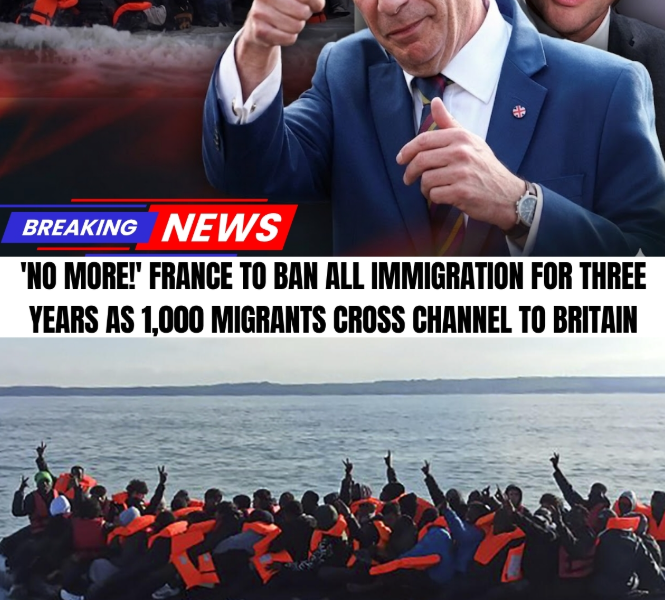
A massive geopolitical shockwave has just rocked Europe! French Justice Minister Gérald Darmanin has dropped a total bombshell, proposing a radical THREE-YEAR BAN on all legal immigration to France, declaring the country’s integration capacity has officially collapsed!.T

A drastic geopolitical shift is looming over the English Channel as French Justice Minister Gérald Darmanin proposes a total, three-year ban on legal immigration to France, citing a collapse in the nation’s capacity for cultural assimilation. The shock announcement coincides with a massive Bank Holiday surge of small boat crossings to the UK, exacerbating a severe internal crisis within the British Labour government over its border policies.
France’s Radical Policy Shift
Speaking to French media this weekend, Justice Minister Gérald Darmanin declared that immigration to France has “reached its capacity for integration and assimilation,” concluding, “We must put an end to immigration as it is today.”
Darmanin proposed immediate, hardline measures, starting with blocking migrant family reunification programs. Crucially, he intends to reform the French constitution to establish hard legal quotas on the number of people allowed into the country. Darmanin, a veteran of President Emmanuel Macron’s successive governments, warned that if the issue is not resolved immediately, it will dominate next year’s French presidential election.
The View from the Channel: A Bank Holiday Surge
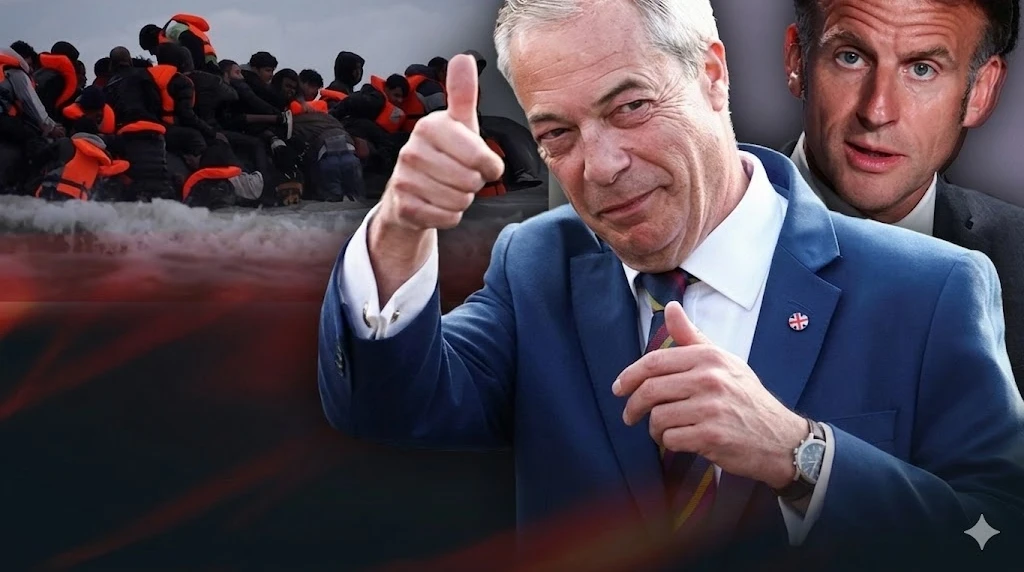
While Paris debates a total immigration freeze, the immediate reality on the French coastline remains highly porous. GB News reported this morning that over 70 illegal migrants arrived in Dover, bringing the total number of arrivals since Friday to approximately 975.
This weekend’s surge has effectively doubled the total number of Channel crossings for the month of May, bringing the monthly figure to nearly 2,000.
Reporting from the French coast at Dunkirk highlighted a shift in smuggling tactics. To evade French police—who are attempting to slash inflatable dinghies on the beaches—smugglers are now utilizing “taxi boats.” These vessels move along the shoreline, picking up migrants who wade into the water from various points, before turning toward Britain under the escort of a French naval vessel to the halfway point of the Channel.
The Farage-Bardella Axis
The border crisis is rapidly forging new alliances on the European political right. During the broadcast, Nigel Farage claimed he recently held a private meeting in London with Jordan Bardella, the right-wing candidate currently leading the polls for the French presidency.
Farage detailed a blunt ultimatum delivered over lunch, stating he told Bardella: “We’ve given you £800 million quid already… unless you stop this, I’m going to get the Royal Marines to tow boats back to France.” According to Farage, Bardella recognized the threat as an “act of war” but ultimately accepted the premise, allegedly agreeing that a future Reform UK government would be permitted to tow migrant vessels back to Calais.
UK Domestic Paralysis: Labour’s Internal Civil War
As the cross-Channel situation escalates, the UK Labour government appears paralyzed by internal ideological divisions regarding domestic immigration enforcement.
Political commentators highlighted a widening rift over policies proposed by Home Secretary Shabana Mahmood. Mahmood’s hardline plans—which include doubling the qualifying period for ‘Indefinite Leave to Remain’ from 5 to 10 years and barring foreign nationals from accessing state benefits—are facing a severe revolt from the left wing of the Labour Party.
Deputy Prime Minister Angela Rayner has reportedly described Mahmood’s proposals as “un-British.” Analysts on GB News concluded that the government’s political capital is “absolutely nil” and that the left-wing caucus will successfully block the Home Secretary’s reforms.
Furthermore, commentators expressed deep concern that the Labour government is preparing to implement a “drip-fed amnesty” for hundreds of thousands of illegal migrants currently in the UK, similar to recent sweeping amnesties enacted in Spain. This prospect, critics argue, is heavily opposed not only by the broader public but specifically by legal migrants who navigate the formal immigration system.
Conclusion
The simultaneous developments in Paris and London illustrate a breaking point in European migration politics. As France openly debates shutting its doors entirely to prioritize assimilation, the UK is absorbing the immediate overflow while descending into political infighting. With French presidential hopefuls making backroom deals with British populists and the Starmer government struggling to maintain a unified border strategy, the Channel crisis is poised to dictate the political survival of administrations on both sides of the water.
